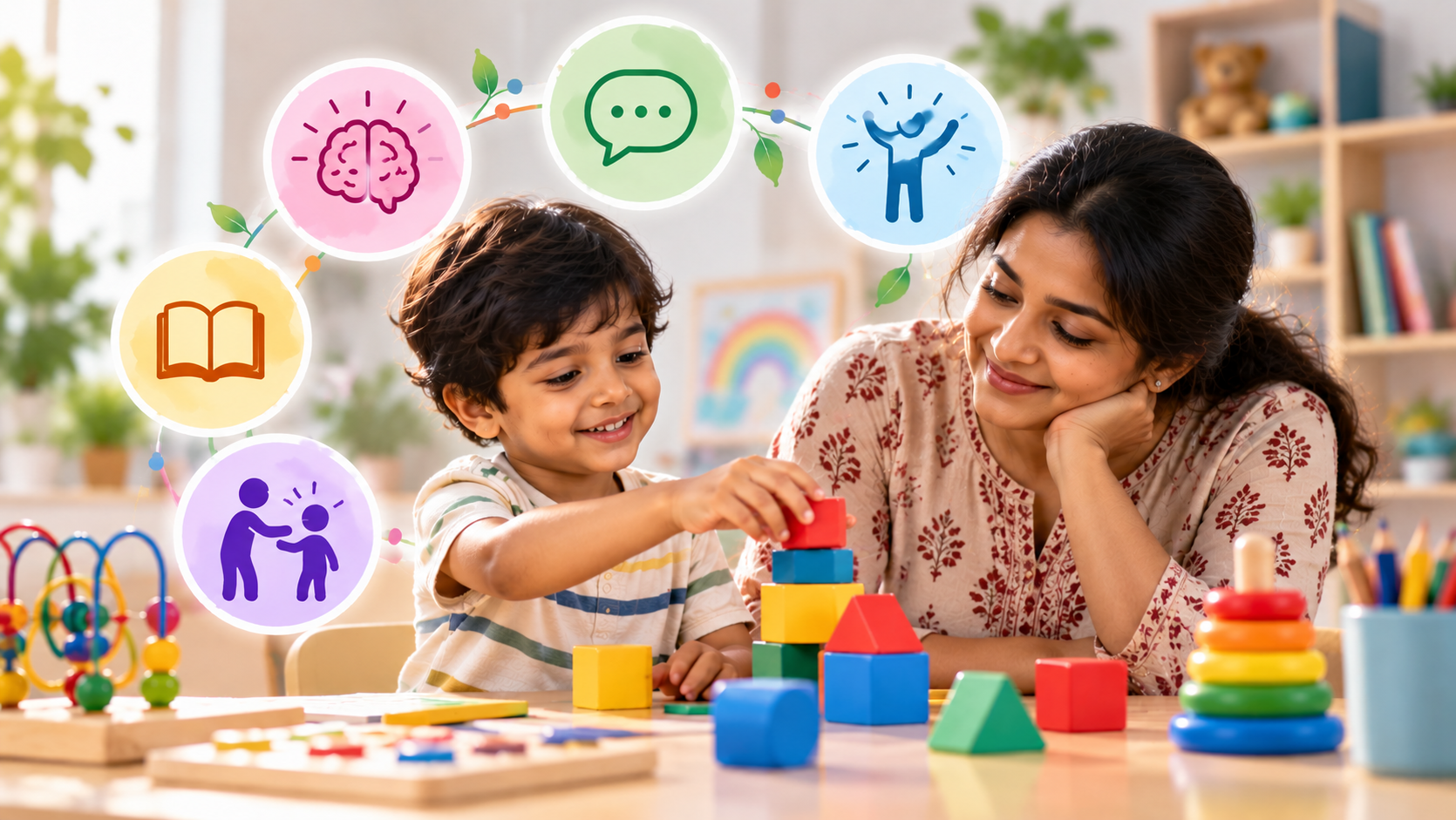
Every child develops differently. Some children may require additional support with communication, routines, emotional regulation, learning engagement, sensory processing, or social interaction.
Understanding Developmental Needs
Parents are often the first to observe developmental changes. Delayed speech, difficulty maintaining routines, sensory sensitivities, learning challenges, or behavioral concerns may encourage families to seek guidance.
Why Early Support Matters
Early developmental support may help children build routines, confidence, communication skills, and emotional engagement.
Home-Based Developmental Support
Many families prefer home-based support because children often feel more comfortable in familiar surroundings. Parents can also observe progress directly and reinforce routines consistently.
Behavioral and Learning Support
Structured routines, visual supports, positive reinforcement, and family involvement may support developmental progress and emotional regulation.
Therapy Coordination
Families often need support coordinating multiple professionals including occupational therapists, speech support professionals, behavioral specialists, and educators.
Parent Guidance
Families themselves require support, reassurance, and structured guidance. Parent participation plays an important role in developmental journeys.
Srishti’s Approach
Srishti Healthcare Solutions provides family-centered developmental support coordination, home-based support planning, behavioral support coordination, and therapy coordination pathways.
Conclusion
Developmental support journeys require patience, consistency, compassion, and coordinated guidance. Families benefit from structured support systems that focus on the child’s strengths and long-term wellbeing.
Child Development Support